
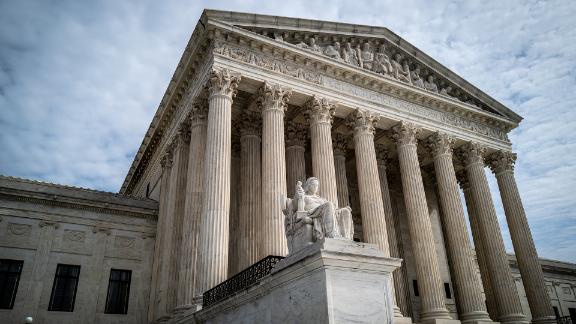
The Supreme Court has upheld the Court of International Trade’s decision that the International Emergency Economic Powers Act (IEEPA) does not authorize the president to impose tariffs. Thus, the executive orders issued by President Donald Trump imposing tariffs under IEEPA are not legal.
As we discussed in a previous FORsights™, the Supreme Court heard oral arguments on November 5, 2025, in the Learning Resources, Inc. v. Trump, President of U.S. and Trump, President of U.S. v. V.O.S. Selections, Inc. case to decide whether Trump had the authority to implement tariffs under IEEPA.
The Supreme Court emphasized that tariffs are taxes, and Article I of the Constitution assigns taxing authority exclusively to Congress. Any authority that the executive branch has to impose tariffs must be expressly delegated by Congress through statute. IEEPA gives the president the authority to “regulate importation,” however, according to the Supreme Court, “regulate importation” does not mean to impose tariffs. Congress has always used explicit language when delegating tariff authority and the statutory phrase relied on by the government does not include the power to levy tariffs.
Can the president still impose tariffs?
Although the ruling held that tariffs issued under IEEPA were not legal, this does not have any effect on tariffs issued under sections 232, 301, or under any other law authorizing the president to levy tariffs. Section 232 tariffs have been imposed on certain imports to protect national security, including imports of aluminum, copper, and steel. Section 301 tariffs are implemented to counteract unfair trade practices and are directed toward designated countries or products; for instance, numerous Chinese goods are subject to these tariffs.
What does this ruling mean for refunds?
The majority opinion was noticeably silent on the status of IEEPA tariff refunds; however, Justice Kavanaugh’s dissent notes that there is a potential for substantial refunds, but those refunds would be a complex process that would have significant consequences for the U.S. Treasury.
For a more detailed discussion on refunds, read our article, “How to Prepare for the Tariff Supreme Court Case Decision.”
What should I do now?
Look forward to forthcoming FORsights™ for a more detailed discussion on the case.
Please contact one of our trusted professionals if you are affected by this ruling and would like to know more.