
Given the possibility of the U.S. Supreme Court (SCOTUS) overturning President Donald Trump’s International Emergency Economic Powers Act (IEEPA) tariffs, companies may need to:
- Accumulate documentation and support for IEEPA tariffs paid to claim refunds.
- Review contracts to determine the impact of IEEPA refunds.
- Understand the general refund processes, while acknowledging that SCOTUS could establish a unique process for this situation.
- Consider strategies for reducing tariffs, including the use of bonded warehouses and free trade zones.
- Anticipate “replacement” tariffs from the administration, whether they be under Sections 232, 301, or 338.
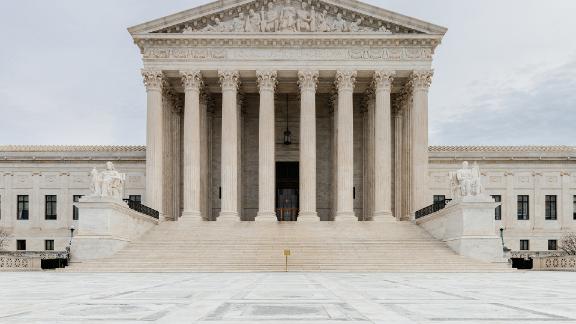
It’s been more than two months since the Supreme Court heard arguments about the Trump administration’s tariffs implemented under the IEEPA. It is expected that a decision will be issued in January (or early February). While the decision in the Learning Resources, Inc. v. Trump, President of U.S. case could come down either way, companies should be prepared to act quickly if SCOTUS were to overturn the IEEPA tariffs.
Will There Be Tariff Refunds?
The question on everyone’s mind: Will there be tariff refunds? Maybe. From a historical perspective, when a tax is overturned or deemed unconstitutional, most of the time taxpayers who previously paid this tax are due a refund. However, these refunds are not a complete certainty. While rare, SCOTUS has established “prospective overruling” or “sunbursting” based off the 1932 case Great Northern Railway Co. v. Sunburst Oil & Refining Co., 287 U.S. 358 (1932). In short, this doctrine would allow for U.S. Customs and Border Protection (CBP) to avoid paying IEEPA tariff refunds, even if they decide to disallow the tariffs prospectively. Prospective overruling is rare and is only used “as exceptional expedient when the traditional retroactivity would wreak more havoc in society than society’s interest in stability will tolerate.”1 In fact, during oral arguments, the plaintiff (for better or for worse) opened up this possibility when asked about the foreseen difficulties with administering refunds.
For the sake of preparation, let us assume there will be an opportunity for IEEPA tariff refunds. What should companies be doing now in anticipation? The following outlines items importers of record should consider prior to SCOTUS’ decision.
Make Sure IEEPA Tariffs Are Documented Appropriately
Tariffs are levied under various laws. Some of these tariffs “stack,” meaning it’s possible to have an IEEPA tariff, a §232 tariff, and a §301 tariff levied on the same product. It’s important to note that SCOTUS’ decision would only apply to IEEPA tariffs and not those under other sections. This amplifies the need for adequate documentation and record-keeping as importers of record may need to separate total duties on their imports between applicable tariff provisions.
For example, a protest can be filed if you believe a tariff refund is due. Protests can be completed on CBP Form 19 and be filed in the Automated Commercial Environment (ACE) protest module electronically.2 Per the form’s instructions, information required to be reported on this form (and, therefore, should be kept in the importer’s records) include:
- The number and dates of entries
- The date of liquidation of the entry
- A specific description of the merchandise
Records proving payment of the tariffs and other documentation filed upon entry may also be needed, depending on the requirements SCOTUS outlines in its decision.
Some companies heavily depend on third-party customs brokers to handle tariff compliance and payments. If not already received, it may be prudent to request documentation and totals on IEEPA tariff amounts from these brokers now. If there is a question about tariffs paid, an importer of record can file a Freedom of Information Act (FOIA) request to receive data from the CBP directly.
Consider the Impact of Contracts
Any refunds from the CBP will come to the importers of record, and not to the ultimate consumers or customers of those importers. However, importers of record may have included clauses in their contracts with customers addressing tariff refunds or adjustments. While this may have previously been a strategy to justify charging a higher price, importers may now need to fulfill the contract’s requirement to pass on tariff refunds. Taking an inventory of the various obligations may be a valuable exercise, especially as companies attempt to estimate the possible cash flow and administrative steps coming their way.
Understand the Current Options
While it is possible that the SCOTUS decision will establish additional options, the current methodologies for requesting refunds of tariffs include:
- File a protest
- File a lawsuit
- File an extension for entry liquidation
Currently, 19 U.S.C. §1514 dictates which method to use for receiving a refund and is dependent on whether the import has been liquidated or not. If previously liquidated, importers must file a protest within 180 days of liquidation. Importers may have another 180 days to file suit in the Court of International Trade (CIT) if their protest is denied by the CBP.
For those imports not yet liquidated, some have opted to file suit in the CIT under 28 U.S.C § 1581(i). However, recently the U.S. Court of International Trade held that it would be able to “reliquidate” imports to allow for refunds if necessary. This ruling counteracts some anxiety about whether previously liquidated imports would even be eligible for a refund without a preemptive suit.
As discussed in our previous article, “Tariff Supreme Court Case Looms,” another option may be filing an extension for entry liquidation. For those wanting to avoid paying a tariff and either dealing with the refund process or losing the money altogether, it’s possible to file up to a three-year extension for this liquidation.
Anticipate “Replacement” Tariffs From the Administration
It is entirely possible that if SCOTUS overturns IEEPA tariffs, the Trump administration will “replace” the tariffs with new ones under different sections. For example, the recent trend is to issue some of the newly announced tariffs under §232, and that trend may continue regardless of the SCOTUS decision. Section 232 tariffs are implemented with the reason of protecting national security. Section 301 may be utilized—recently used to impose some tariffs on China—which are implemented to target certain countries deemed to be acting “unfairly” against the United States. Even with the prerequisite processes needed to implement §301 tariffs, it is possible that the administration may implement country-specific §301 tariffs to replace overturned IEEPA tariffs.
Finally, specifically discussed in the SCOTUS hearing, §338 tariffs could also be implemented in place of the IEEPA tariffs. This section does not require an investigation to occur prior to implementation, unlike §232 and §301 that require an investigation. In addition, these tariffs are capped at a 50% rate. Alternatively, the president reserves the right to embargo the import of goods from countries all together—a more dramatic but technically possible strategy under the IEEPA.
How Forvis Mazars Can Help
Forvis Mazars can help you prepare for the SCOTUS decision. Whether it be connecting you to a law firm for filing a protest or suit with the CIT, discussing the use of a bonded warehouse, or considering strategies like transfer pricing for reducing tariffs, regardless of the decision—we are here for you.
If you have any questions or need assistance, please reach out to a professional at Forvis Mazars.