
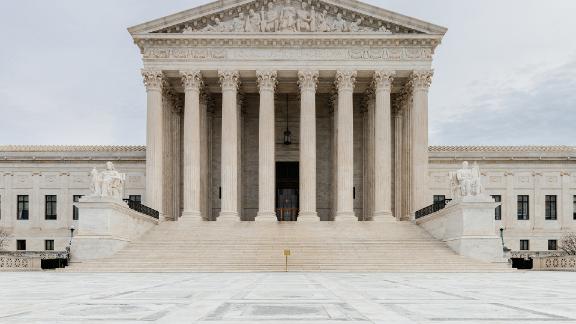
The Supreme Court of the United States (SCOTUS) has issued a decision in the Learning Resources, Inc. et al. v. Trump case, and it’s very clear: tariffs imposed under the International Emergency Economic Powers Act (IEEPA) are not legal. Outside of the legal debate and some disagreement within the majority about their reasoning, importers of record are left with the practical fallout of what this means for their businesses. How are refunds going to work, and when can they be expected? What action should be taken now? What are the tariff rates now in place?
Tariff Refunds
To be succinct, the process for specifically handling refunds related to IEEPA tariffs is not yet established. Although SCOTUS was silent as to the requirement and process of issuing refunds, it did establish the United States Court of International Trade (CIT) as the venue for resolving these matters (instead of the district courts). The CIT is under no obligation to decide on a path forward within a specific time frame. The refund process and execution of refunds could be established soon, or it could take years.
In the meantime, importers of record are able to leverage the currently available—and long-established—methods for obtaining tariff refunds. The approach differs depending on the date of liquidation.1 Liquidation is the “final computation or ascertainment of duties on entries for consumption or drawback entries.”2 Said another way, it’s the date the tariff is “finalized.” This generally occurs 314 days after an import enters the United States.3
If an import entry is not yet liquidated, importers or their brokers would need to file Post Summary Corrections (PSCs) to correct the tariff amount. According to the U.S. Customs and Border Protection (CBP), PSCs will only be valid and processed if (among other things):
- An entry summary must be in accepted status.
- An entry summary cannot be under CBP review.
- An entry summary must be paid in order for the PSC to be successfully submitted.
- PSC filers can submit these changes within 300 days from the date of entry and up to 15 days of the scheduled liquidation date, whichever date is earlier.
- If PSCs are filed outside the specified time frames, the Automated Commercial Environment (ACE) will automatically reject them.4 However, if a liquidation extension is filed, there is an exception to this 300-day window.
If an import entry is already liquidated, the importer can file a protest5 to obtain a refund, provided the protest is filed within 180 days of liquidation.6 These protests are generally filed with CBP Form 19, and are submitted within the CBP’s ACE protest module. If the protest is denied, it is possible for the importer to file suit with the CIT (within another 180-day window).
Prior to the SCOTUS decision, the CIT held that it would have the power to “reliquidate” entries that were both liquidated and past the 180-day cut-off time frame for filing protests. To not allow for reliquidation at this point could be seen as penalizing importers of record for depending on their own holding. However, whether the CIT will actually provide reliquidations for IEEPA tariff refunds is yet to be seen.
Next Steps
Action items for importers include:
- Ensure tariff-related documentation is gathered
- Review contracts between vendors and customers
- Determine which refund “path” is most appropriate (PSC versus a protest)
Documentation
Documentation of the following may prove helpful when pursuing a refund:7,8
- Proof of payment
- Packing list
- Certificates of origin
- Invoice
- The number and dates of entries
- The date of liquidation of the entry
- A specific description of the merchandise
If taxpayers do not already have this information available, you may need to request it from your broker or file a Freedom of Information Act (FOIA) request.
Contracts
Not all businesses and individuals that have been affected by tariffs will benefit from refunds. However, if an importer accounted for refunds in their contracts with customers, the end consumer may receive some benefit. Whether it be through pricing adjustments or repayments, importers may need to review their contracts to identify next steps.
What Tariffs Remain?
The same day as SCOTUS issued their decision, President Trump addressed the press and announced a 10% global tariff, later to be raised to 15%. This tariff is implemented under Section 122. Unlike IEEPA, Section 122 limits the tariff amount to 15% and only allows for the tariff to be implemented for 150 days without congressional extension. Therefore, the currently implemented 15% tariff will expire in July of this year. There are exceptions to this global tariff—and they aren’t necessarily the same exceptions that applied to the IEEPA tariffs. Exceptions include (among others):
- Certain critical minerals
- Certain agricultural products, including beef, tomatoes, and oranges
- Pharmaceuticals and pharmaceutical ingredients
- Certain electronics
- Passenger vehicles9
Further, if the products are subject to Section 232 tariffs, to the United States–Mexico–Canada Agreement (USMCA), or are textiles and apparel from certain countries under the Dominican Republic-Central America Free Trade Agreement (CAFTA-DR), then the 15% tariff does not apply.10 These exceptions come even with the threat of additional tariffs based on digital service taxes or the import of Russian oil.
This shift to 15% provides some interesting considerations for the U.K. and EU, as agreements for a 10% and 15% rate, respectively, had been reached. While this discrepancy has not been addressed by President Trump as of the writing of this article, the EU has paused on moving forward with the trade agreement with the U.S. until resolution is reached.11 Even so, many do not expect agreements with other countries to be affected by the SCOTUS decision, although some agreements may require adjustments. Prior to the decision, various countries had agreed to tariff rates above the now-implemented 15% level. This includes:
- Vietnam: 20%
- Bangladesh: 19%
- Thailand: 19%
- India: 18%
Therefore, these countries (among others) may require adjustments to their trade agreements given the 15% rate.
On a broader scale, non-IEEPA tariffs remain in place. Whether it be Section 301 tariffs on China or Section 232 tariffs on specific products, the SCOTUS decision does not affect the implementation of these tariffs. For example, the following remain:
- 50% tariff on steel, aluminum, and copper
- 25% tariff on certain derivatives of timber and lumber
- 25% tariff on certain automobile parts
Said plainly—tariffs are here to stay.
Other Strategies
With the current reality of tariff prevalence and an uncertain timeline for tariff refunds, importers of record are left wondering what strategies are available to them. Some are considering whether they can obtain financing based on future refund claims. This strategy may provide a short-term cash flow for importers waiting on the CIT to determine refund processes. Further, the impact of refunds may affect transfer pricing strategies and merger and acquisition (M&A) agreements. Importers should discuss with their tax advisors how refunds may impact their tax returns and positions—everything from cost of goods sold, to state and local tax positions, to depreciation could be impacted. Regardless, general tariff mitigation strategies remain and should be analyzed—everything from unbundling service costs to leveraging the first sale rule. If you have any questions or need assistance, please reach out to a professional at Forvis Mazars.
- 1“Post Summary Corrections,” cbp.gov; “Protests,” cbp.gov, 2026.
- 219 CFR Part 159.1
- 3“Potential Refunds of Tariffs Imposed Under the International Emergency Economic Powers Act (IEEPA),” congress.gov, January 13, 2026.
- 4“Post Summary Corrections,” cbp.gov, 2026.
- 5“§1514. Protest against decisions of Customs Service,” govinfo.gov, 2019.
- 6“Protests,” cbp.gov, 2026.
- 7“Impacts of the Recent US Supreme Court Decision on Trump's Emergency Tariffs,” klgates.com, February 2026.
- 8“CBP Forms,” cbp.gov, 2026.
- 9“Fact Sheet: President Donald J. Trump Imposes a Temporary Import Duty to Address Fundamental International Payment Problems,” whitehouse.gov, February 20, 2026.
- 10iBid.
- 11“E.U. Freezes U.S. Trade Deal Approval Amid Trump’s Tariffs Threat,” time.com, February 23, 2026.