
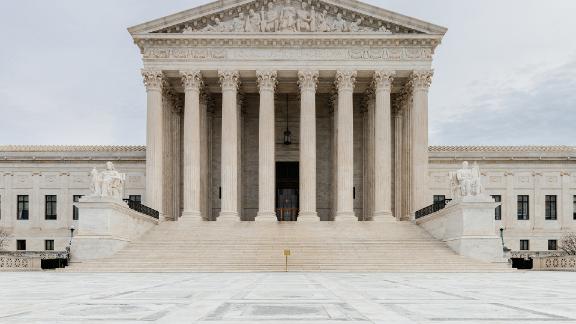
On June 27, 2025, the U.S. Supreme Court upheld the Federal Communications Commission (FCC) Universal Service Fund (USF) in a 6–3 ruling in Federal Communications Commission v. Consumers' Research.
This ruling helps ensure that the USF, which currently distributes around $8 billion a year, will continue to support access to essential telecommunications services regardless of income level or geographic location. Established under the authority of the Communications Act of 1934 and expanded by the Telecommunications Act of 1996, the USF program supports four key aspects:
- High Cost (for rural and remote areas)
- Lifeline (for low-income consumers)
- E-Rate (for schools and libraries)
- Rural Health Care
These programs were designed to help narrow the digital gap by funding infrastructure, subsidizing service costs, and promoting affordable access to broadband and voice services in rural areas and across the United States.
USF Program Ruling Takeaways
The challengers to the current USF funding were headed by Consumers’ Research, backed by various advocacy groups, and they have previously brought a series of essentially identical challenges to Universal Service Administrative Company (USAC) contribution factors in various circuit courts, including the Sixth Circuit and Eleventh Circuit. The supporting group included a bipartisan group of 22 state attorneys general, various consumer advocacy groups, and broadband groups.
After all the points were argued, Justice Elena Kagan delivered the opinion of the Supreme Court on the three main arguments presented by Consumers’ Research.
- Nondelegation Doctrine: The first argument and main point of the entire case was the nondelegation doctrine. They contended that the USF program violated the nondelegation doctrine when Congress gave the FCC too much discretion without clear limits, allowing it to effectively impose a tax—an action that only Congress can take.
The Supreme Court reversed the Fifth Circuit ruling. Justice Kagan, writing for the majority, rejected both the nondelegation and subdelegation claims. The Supreme Court reaffirmed that Congress could delegate authority to agencies as long as it provides a clear guiding principle. In essence, upholding the FCC’s ability to interpret the USF order and implement USF as it deems appropriate. If they had found in favor of Consumers’ Research, it would have been a blow to the ability of the FCC to guide programs without the explicit guidance of Congress, complicating and delaying any action of the FCC.
- USF Fee: The second argument contended that the USF fee essentially constituted a tax and that the FCC does not have legal authority to impose a tax. Justice Kagan summarized the argument regarding whether the fee was a tax in the following discussion:
“The distinction between taxes and fees, even if occasionally needed, is a morass—or as the Government (which levies both) puts it, ‘unbelievably murky in practice.’ ...”
The distinction between a fee and a tax is nuanced, depending on how the amount is calculated and who ultimately benefits. The ruling has affirmed that, regardless of classification, the FCC has legal authority to collect these funds in support of the USF’s mission.
An important point addressed the delegation of powers in that it was argued that the FCC had deviated from the original intent of the USF program, and this was cited as an example of why the FCC should no longer be allowed to. The summary noted, “The Act’s embrace of evolution—the permission it gives the FCC to subsidize different services now than 30 years ago—ensures that the universal-service program will be of enduring utility. But that conferral of discretion does not strip the statute of standards and constraints. The Commission still may fund only essential, widely used, and affordable services, for the benefit of only designated recipients.”
- Contribution Rate: The third and final point addressed whether USAC should be allowed to determine the contribution rate.
The summary opinion noted, “The Administrator [USAC], following the FCC’s rules, makes recommendations. But the Commission decides whether or how to use them in setting the contribution factor.” The Supreme Court clearly stated that, in their opinion, the FCC always has control of the process and utilizes USAC, but it can overrule them.
Consumers’ Research failed to support their challenges to the USF fund and the management thereof. Based on this decision, the USF fund remains intact, but the future of the program could hinge on contribution reform.
According to the ruling, the individual points were summarized as: “We hold that no impermissible transfer of authority has occurred. Under our nondelegation precedents, Congress sufficiently guided and constrained the discretion that it lodged with the FCC to implement the universal-service contribution scheme. And the FCC, in its turn, has retained all decision-making authority within that sphere, relying on the Administrative Company only for non-binding advice. Nothing in those arrangements, either separately or together, violates the Constitution.”
How Forvis Mazars Can Help
This case had the potential to significantly disrupt a foundational program that supports rural communication providers. While there is room to modernize and improve the USF, its core principles remain sound and are supported by well-established legal precedent. Ongoing engagement with your elected representatives is essential to reinforce the critical role USF plays in advancing rural connectivity and closing the digital divide. Sustained advocacy will be key to securing the long-term future of the program. If you have any questions or would like more information on telecommunications services, please reach out to a professional at Forvis Mazars.