
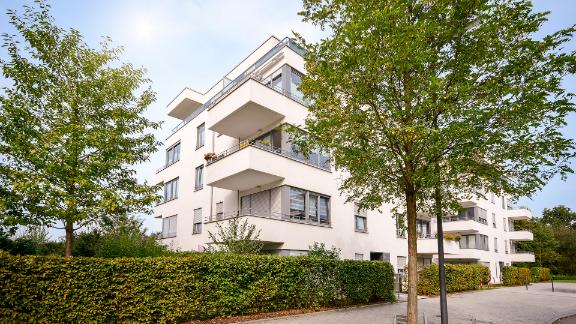
A cost segregation study can help accelerate tax deductions related to your investments in multifamily housing communities, allowing you to defer income taxes and increase cash flow. Cost segregation is an IRS-recognized engineering-based study that identifies the specific assets within your multifamily housing communities that will qualify for recovery lives that are lower than the standard 27.5 years over which a building is depreciated.
Planning & Implementation of Cost Segregation Studies
Last August, Congress passed the One Big Beautiful Bill Act (OB3 or OBBBA), which included a provision to permanently reinstate 100% bonus depreciation for qualified property placed in service after January 19, 2025. This bonus depreciation was previously slated to phase out by January 1, 2027. The bonus depreciation could amplify the results of cost segregation studies, as some eligible property with a 20-year or shorter recovery period may qualify for full depreciation upon being placed in service.
Proper planning is important to help ensure full tax benefit, as there are specific rules based on whether the property is newly constructed or acquired.
Your project is a great candidate for a cost study if you have recently acquired property or newly constructed property exceeding $1,000,000, or if you have performed improvements exceeding $500,000. Often, multifamily housing communities benefit from a cost segregation study due to the types of costs incurred to construct and update properties, including interior finishes, unit appliances, and amenity improvements that give rise to a large pool of assets that may be eligible for accelerated depreciation.
In addition, items identified on a per-unit basis will be multiplied by the number of units in which they are installed, given the redundancy of the asset pool.
Personal & Real Property
Cost segregation analysis can be completed in the year that the property is placed into service, or retroactively through a change in accounting method to capture missed depreciation from prior years.
The types of personal and real property that are typically present in multifamily projects (that may be assigned shorter recovery lives as the result of a cost segregation study) typically include:
Personal Property
- Carpet or floating floors
- Laminated countertops and cabinetry
- Removable shelving or closet systems
- Window treatments
- Appliances
- Specialty systems (such as sound, audio/visual, data/telecommunication, and decorative lighting)
- Parts of the plumbing, electrical, and HVAC systems necessary for short-lived specialty assets versus the operation and maintenance of the building
- Decorative pole lights around pools or courtyards
- Play structures and climbing equipment
- Dog agility features
- Removable fencing or gates
- Parcel lockers
Real Property & Site Improvements
- Paving, curbs, and sidewalks
- Swimming pool
- Landscaping and hardscaping
- Storm drainage
- Site lighting
- Site fencing and enclosures
- Carports
The personal property examples listed above would qualify for recovery lives ranging from five to seven years, while the site improvements would qualify for recovery lives of 15 years.
If you have recently completed a rehabilitation of units within your multifamily housing community, many of the costs incurred will qualify as personal property and benefit from a shorter recovery life of five to seven years.
How Forvis Mazars Can Help
Conducting a cost segregation study involves a detailed engineering analysis of a property’s components using the architectural and construction drawings, cost records, and site inspections. Forvis Mazars has a unique team of engineers and CPAs with over 100 years of combined experience. Our multifamily housing team is well versed in reviewing relevant documentation and physical components of your property to help ensure that optimal recovery lives are identified for each asset of your community.
In addition, our team can execute the robust documentation required to support positions taken on recovery lives, giving you peace of mind that your position is well supported. Our studies are prepared in accordance with IRS guidance and established audit standards, with a focus on defensibility and documentation.
For more information, reach out to our team about a feasibility study to identify your estimated benefit from engaging in a cost segregation study.