
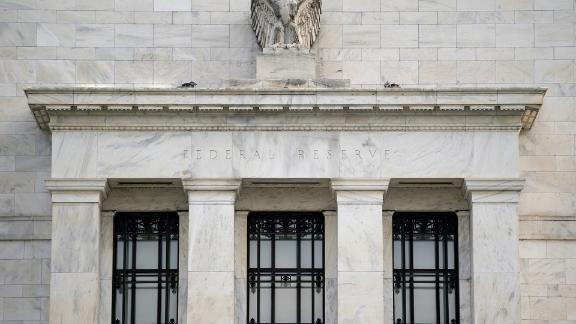
The Federal Reserve banks operate two large-value payment services: the Fedwire Funds Service (Fedwire) and the National Settlement Service (NSS). The Fedwire is a real-time gross settlement (RTGS) service that allows participating financial institutions (participants) to send and receive individual electronic funds transfers up to one penny less than $10 billion in value that are immediate, final, and irrevocable. NSS is a multilateral settlement service that allows for immediate, final, and irrevocable settlement of obligations that arise from private-sector clearing arrangements, such as check clearinghouses, private-sector Automated Clearing House (ACH) networks, and securities settlement systems.
On October 9, 2025, the Federal Reserve Board (Board) announced expanded operating days for the Fedwire and NSS to include Sundays and weekday holidays. The Federal Reserve banks are expected to phase in this expansion beginning in 2028 or later, allowing time to support operational and industry preparedness. Currently, Fedwire operates 22 hours a day, five days per week (9 p.m. to 7 p.m. ET, Monday through Friday, excluding holidays). When implemented, Fedwire will operate 22 hours a day, six days per week (9 p.m. to 7 p.m. ET, Sunday through Friday, including weekday holidays). The Fedwire begins processing online payment orders beginning at 9 p.m. ET on the preceding calendar day. Currently, the NSS operates 21.5 hours a day, five days per week (9 p.m. to 6:30 p.m. ET, Monday through Friday, excluding holidays). When this expansion is implemented, the NSS will operate 21.5 hours a day, six days per week (9 p.m. to 6:30 p.m. ET, Sunday through Friday, including weekday holidays).
In May 2024, the Board published a request for comment on a proposal to expand the operating hours for the Fedwire to a 22/7/365 process. Certain commenters expressed clear preferences on the proposal, while a large majority of small to midsize banks, related trade organizations, and individuals did not support the proposal, noting that, in their view, the costs and challenges related to staffing, operational changes, and competitive pressure from large banks, among other considerations, would outweigh the benefits from the proposal. The Board noted that expanding Fedwire operating hours to include Sundays and weekday holidays would achieve a substantial amount of the benefits of a 22/7/365 operating hours environment, while balancing the requests of many commenters for a phased expansion that maintains significant periods of downtime. According to the Fed, it will continue to monitor industry demand and will stand ready to offer an additional expansion up to 22/7/365 operations no sooner than two years after implementing the 22/6/365 operations.
In alignment with current service terms, participation in the change to a 22/6/365 operation will continue to be optional. A Fedwire participant may decide not to open in order to process payment orders sent to it during overnight hours. If a participant chooses not to operate during some or all potential weekend and holiday operating hours, it would not be required to take action on any payment orders sent to it during those days until its next funds-transfer business day.
According to the Board, the expanded hours for NSS would complement expanded hours for the Fedwire, providing eligible institutions and private-sector payment, clearing, and settlement services with wider opportunities for real-time gross and multilateral net settlement of large-value payments in central bank money. The Board agreed with commenters that expanded hours for NSS would support resiliency in the payment system because private-sector services are able to use NSS as a backup to the Fedwire in contingency scenarios.
FedNow® Service Updates
Created by the Federal Reserve and launched in July 2023, the FedNow Service is an instant payment infrastructure (settlement system) that enables financial institutions of every size around the U.S. to offer safe and efficient instant payment services. Via participating banks and credit unions, businesses and individuals can send and receive instant payments at any time 24/7/365, in real time.
On September 9, 2025, the Fed announced that the FedNow Service Network transaction limit will increase from $1 million to $10 million to help support growing commercial demand, effective November 2025. Currently, there are 1,500 participating financial institutions using the FedNow Service.1
Nacha Updates
On October 14, 2025, voting members of the National Automated Clearing House Association (Nacha), the nonprofit organization that governs the ACH Network, approved five ACH Rules changes with the goal of increasing the awareness and efficiency of International ACH Transactions (IATs). Nacha President and CEO Jane Larimer stated, “The U.S. ACH Network has supported the capability to send and receive cross-border ACH payments for decades. These rule changes should make IATs easier and more efficient to use.”2
The existing IAT Rules went into effect in 2009 and were adopted to provide a format to support compliance with the “Travel Rule,” and Office of Foreign Assets Control (OFAC) sanctions programs.3 These new rules: refine the definition of an IAT with the goal of making it easier to determine whether a payment should be classified as an IAT (effective September 18, 2026); require participating depository financial institutions to register an “IAT-handling contact” within the ACH Contact Registry (effective January 1, 2027); provide an optional “date of birth” field within the IAT Entry, and allow non-bank foreign financial agencies to receive IAT Entries (effective March 19, 2027); and create a new return reason code (R90) to support a Receiving Depository Financial Institution’s (RDFI) decision to return an Entry in compliance with sanctions obligations and establishes a unique return time frame for returns related to sanctions compliance obligations (effective March 17, 2028).
Also, on October 14, 2025, the voting members of Nacha approved an ACH Rules change eliminating the 5 p.m. local time receipt condition, so that funds availability will be required at 9 a.m. (at the RDFI’s local time) on the settlement date for all non-same day ACH credits (effective September 18, 2026).4
How Forvis Mazars Can Help
In the heavily regulated banking industry, leaders face more challenges than ever, from managing shareholder and regulatory expectations to pursuing digital innovation. Forvis Mazars can help your financial institution tackle issues inherent to the industry, including market growth, internal control threats, industry consolidation, and compliance. Our multidisciplinary Financial Services team combines in-depth sector knowledge with a dedication to delivering an Unmatched Client Experience® and helping you prepare for what’s next.
Join us in person to learn more about how we can help your financial institution tackle issues. At our annual 2026 AML/CFT/BSA & Fraud Compliance Conference from May 12 through May 14, 2026 in Sandestin/Miramar Beach, Florida, we’ll identify current and emerging Anti-Money Laundering (AML), Countering the Financing of Terrorism (CFT), Bank Secrecy Act (BSA), and fraud risks.
If you have any questions or need assistance, please reach out to a professional at Forvis Mazars.