Centralize tax data. Automate processes. Elevate tax operations with the Tax Intelligence Platform.
Tax departments frequently face difficulties getting accurate, timely, and data-driven tax insights. Mergers, acquisitions, expansion of products and services, and new tax regulations add to an already complex set of circumstances. Without a unified tax data infrastructure, teams rely on manual procedures and scattered sources for tax calculations. This fragmentation slows down approval workflows and requires extra effort to keep systems updated and in sync. These challenges compound with each reporting period, yet deadlines remain firmly in place.
Forvis Mazars understands the hurdles organizations face every day. While each tax discipline has unique calculations, tax departments need fast, stable access to high-quality data from a single source of truth. Delivered through Intelligence MineTM*, our Tax Intelligence Platform gives your organization a shared data foundation with modular products to help make tax compliance and reporting easier. This approach helps your organization automate processes, speed up approvals, reduce manual errors, and elevate operational efficiency.
* Intelligence Mine™ is a secure environment from Forvis Mazars to deliver a suite of targeted, automation‑driven analytics and intelligence capabilities to clients across industries.
Tax Intelligence Platform
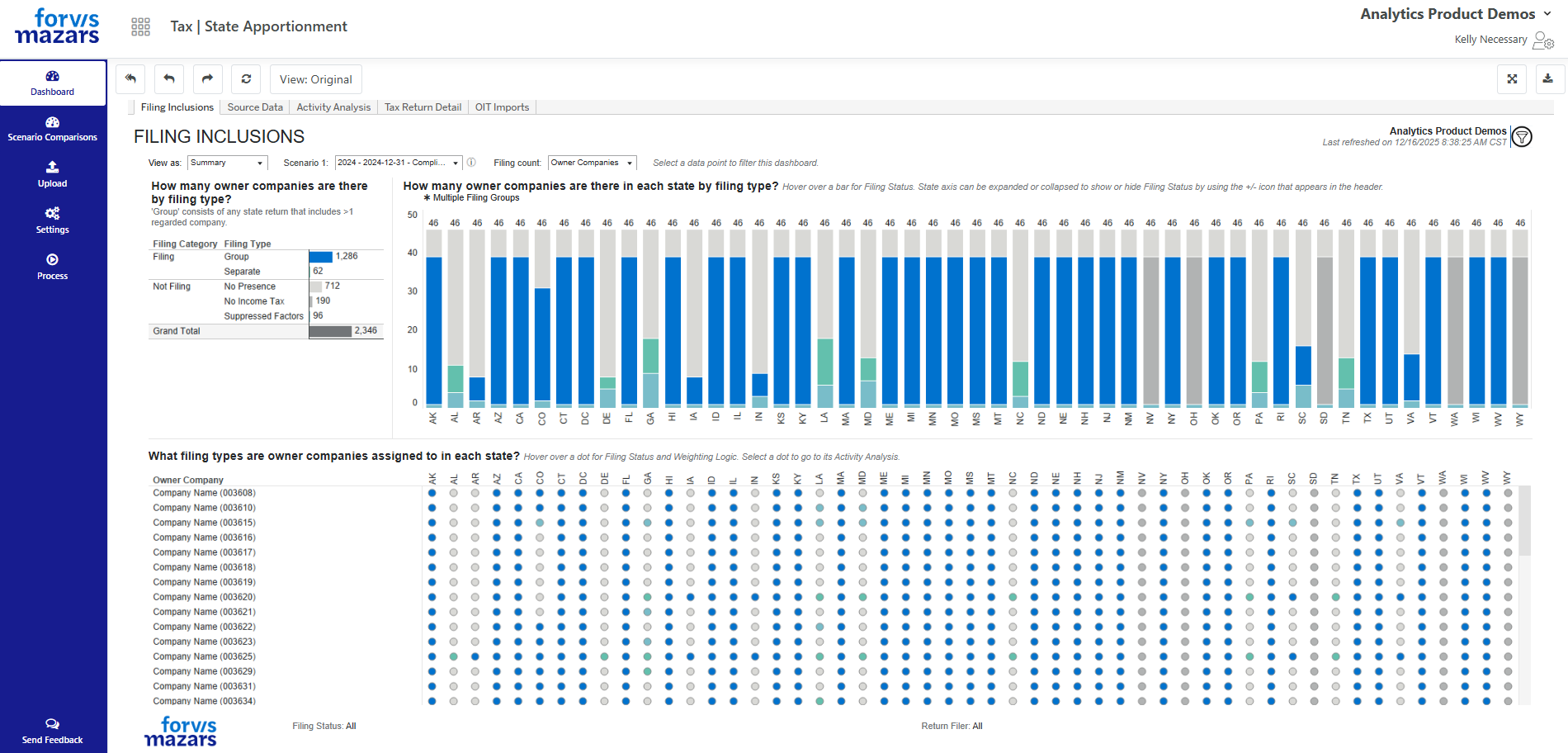
Apportionment
Automate state tax apportionment based on specific tax filing methods and state apportionment rules.
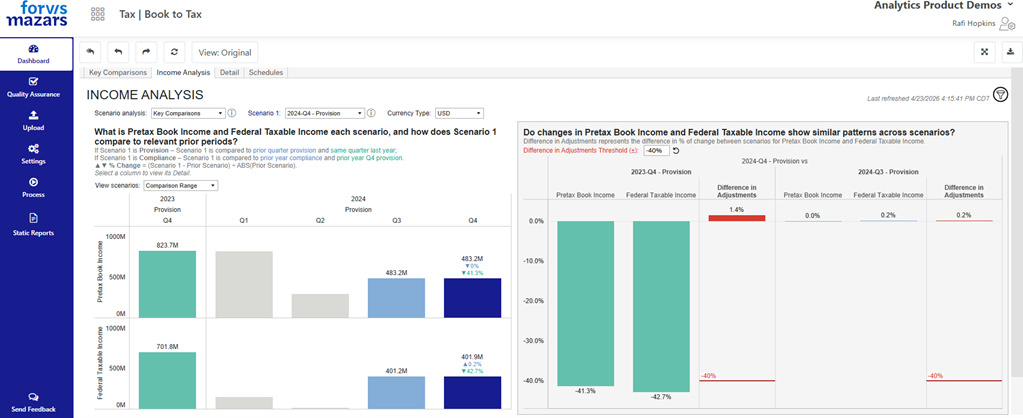
Book to Tax
Automate taxable income and/or tested income computation based on trial balance structure(s) and specific tax adjustments.
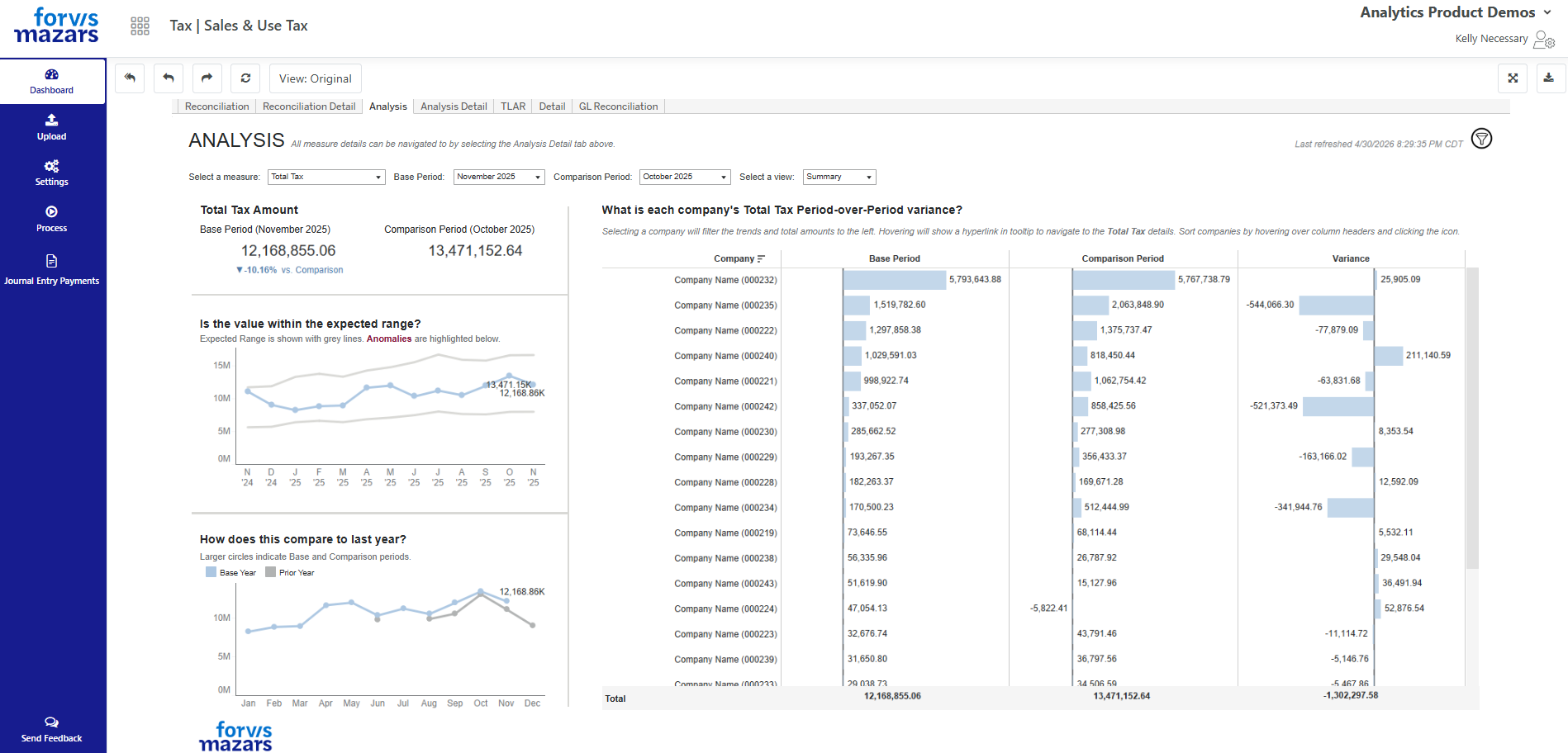
Sales & Use Tax
Store transaction-level sales data and automate reconciliations to help verify accurate and timely sales tax filings.
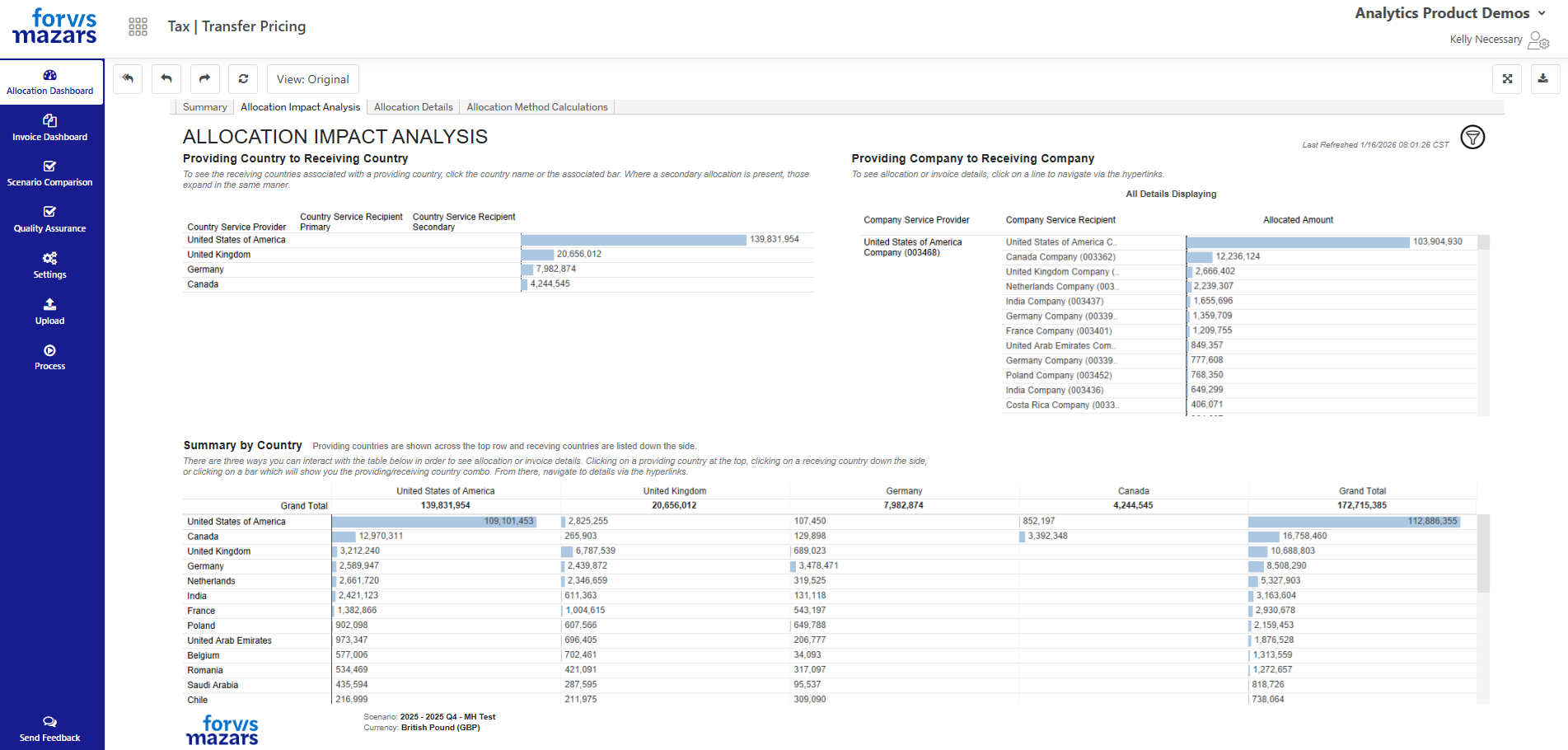
Transfer Pricing
Manage worldwide expense allocations, including client-specific allocation rules and invoice workpaper creation.
Property Tax
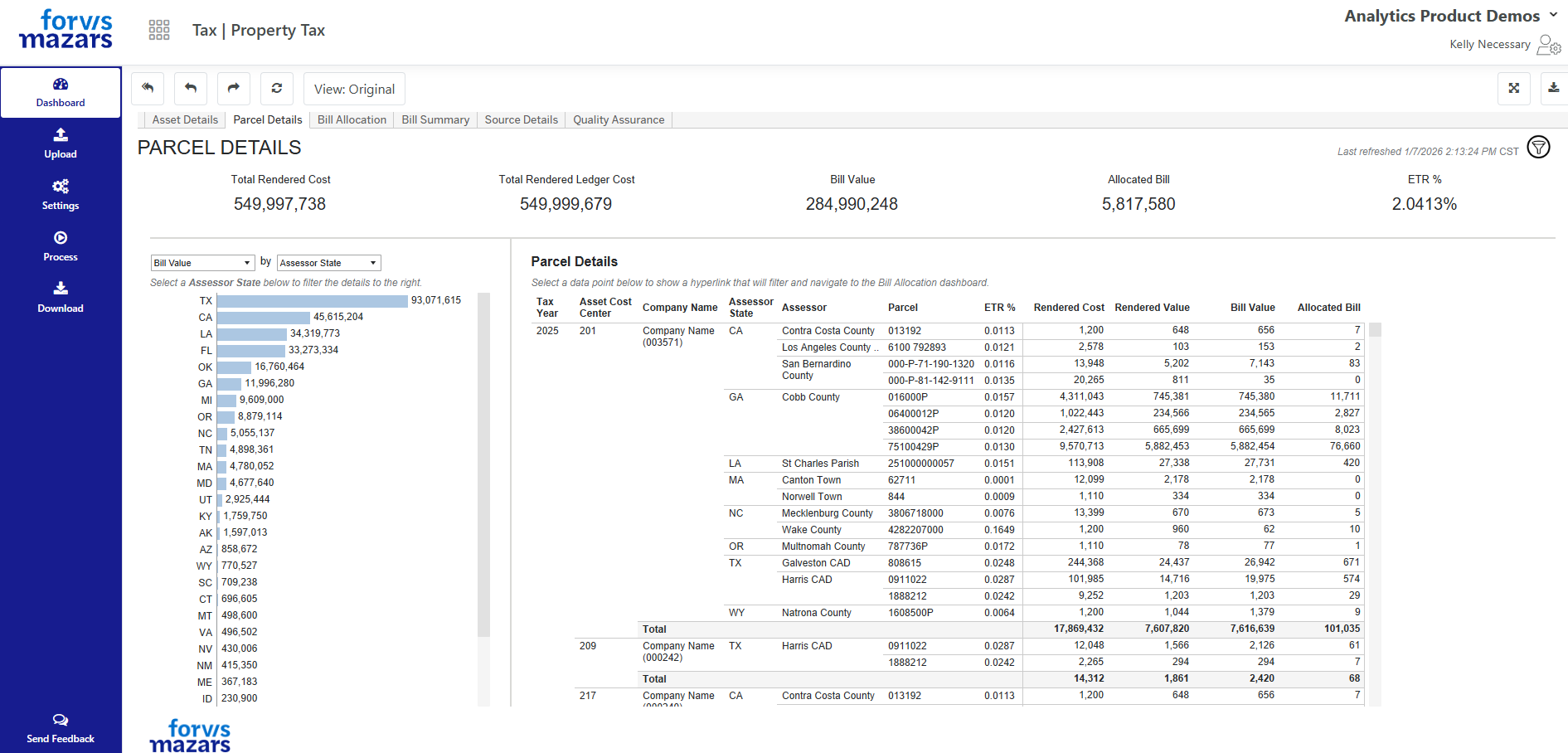
Track fixed asset data across the property tax cycle, including values and effective tax rate. Simplify property tax operating cycle.
Enhance Tax Operational Efficiencies
Consolidate & Centralize Tax Data
Standardize tax-relevant data into a consistent, tax-ready format to help improve data reliability. This enables reuse across tax workflows, dropping downstream rework, and paving the way for true tax data centralization.
Automate Tax Data & Calculations
Automate tax data transformation and preparation to help reduce manual effort, increase efficiency, and reduce errors. In addition, our cloud-based storage normalizes data inputs and outputs for client enterprise data programs, requiring fewer adjustments to core calculation logic and flexibility for custom analytics add-ons.
Integrate With Existing IT
Adapt to organizational needs by enabling flexible ways to bring in data alongside automated integrations with enterprise finance systems. This approach can help reduce manual report extraction and speed up reporting for compliance, provision, and audit support while sustaining detailed, high-volume data at scale.
Access Analytics & Data Visualizations
Access organized dashboards that unlock consistent, actionable insights to help with tax strategy, process improvements, quicker issue identification, and overall financial performance.
Plan Scenarios & Access Audit-Ready Workpapers
Support audit readiness, strategic planning, and regulatory accuracy by storing tax inputs, calculations, and outputs together with clear traceability. Run scenarios, revisit assumptions, and produce audit ready workpapers from the same trusted data foundation with fewer last-minute fire drills.
Streamline your tax operations.
Explore the Tax Intelligence Platform
Every Tax Intelligence Platform product is built on a shared, tax-ready data foundation to help teams reduce manual effort, improve audit readiness, and move faster with confidence. Discover how the offerings below can help teams centralize data, automate complex calculations, and unlock analytics across your organization’s workflow.
Apportionment
Automate state apportionment to help reduce spreadsheet effort, decrease errors, and improve audit readiness.
Key Features of Apportionment
Tax departments often spend significant time gathering, analyzing, and computing state apportionment factors required for compliance. This requires collecting disparate data sources and manual spreadsheet computations, expending critical tax resources, and increasing unnecessary risks from potential errors.
Address state tax apportionment issues with an automated, affordable tool that integrates with your organization’s IT infrastructure.
Key Features
On-Demand Processing & Reporting
Automated Apportionment Computation
Centralized Cloud-Based Platform
Streamlined Setup
Audit Details & Analytics
Book to Tax
Accelerate compliance and provision support with automated book-to-tax and tested income calculations.
Key Features of Book to Tax
Tax departments spend countless hours gathering data, applying adjustments, and calculating taxable income for compliance, cash tax, and accounting—draining resources and increasing risk. With income tax returns and provisions under constant scrutiny, organizations need an affordable, automated offering that integrates with their IT infrastructure.
Automate taxable income calculations, including tested income, by transforming company data into standardized templates on a secure, user‑controlled platform. Gain speed, consistency, and confidence while enabling on‑demand processing, forecasting, and comparative analytics.
Key Features
On-demand processing and reporting to support compliance, forecasting, and scenario planning
Automated book‑to‑tax calculations, including reverse book and change‑in‑balance M adjustments, with hybrid and manual options
Centralized cloud-based platform with standardized data storage for comparative and advanced analytics
Streamlined setup configured to client‑specific trial balance structures, tax accounts, and consolidations
Audit‑ready details and analytics, including quality assurance tools, visualizations, and downloadable workpapers
Sales & Use Tax
Simplify compliance and enhance audit readiness by centralizing transaction-level data.
Key Features of Sales & Use Tax
Monthly reporting cycles, high transaction volumes, and increased audit scrutiny make managing sales and use tax data more complex. Manual processes and limited transaction‑level storage add effort, risk, and delays.
This offering is a technology-enabled platform that helps centralize, automate, and streamline the collection, transformation, and management—empowering compliance, reconciliation, audit readiness, and ongoing tax transformation.
Key Features
Centralized repository for monthly, transaction‑level sales and use tax data
Scalable and modular architecture aligned to existing systems
Flexible data ingestion and preparation for compliance, accounting, and audit support
Automated compliance workflows including reconciliations, adjustments, and manual processes
Advanced dashboards and analytics to help identify anomalies and reduce audit risk
Transfer Pricing
Automate management service allocations with audit ready reporting and scenario planning.
Key Features of Transfer Pricing
Tax departments invest significant time manually gathering, analyzing, and allocating headquarters management services to affiliates.Spreadsheet-based processes waste time and increase potential errors, exposing enterprises to unnecessary risks.
This offering streamlines management service allocations and invoicing, tailored to your organization’s needs. It helps produce audit-ready results; adapts to diverse business requirements; integrates seamlessly with existing IT systems; and empowers tax teams with greater control, consistency, and confidence.
Key Features
On-demand processing and reporting for scenario planning and comparative analysis
Automated management service allocations and invoice amounts
Centralized secure cloud-based platform with standardized data storage
Streamlined setup designed to fit within your organization’s existing ecosystem
Audit‑ready details and analytics, including quality assurance dashboards and downloadable workpapers
Property Tax
Centralize property tax data for compliance, accruals, and audit readiness.
Key Features of Property Tax
Managing fixed asset, valuation, and jurisdictional data year-round can overwhelm tax teams. Decentralized processes, paper‑based notices, and limited visibility add inefficiency and risk.
This offering helps simplify data integration, automate extraction and reconciliation processes, and enhance analytics and visibility. Supporting renditions, accruals, payments, and audits, it creates a single source of truth for managing complex property tax operations.
Key Features
Enhanced audit trail and traceability across renditions, notices, bills, and payments
Real‑time access to data for accruals, budgeting, and effective tax rate analysis
Improved tracking of asset situs and reporting accuracy
Centralized data for fixed assets, values, bills, and tax rates